
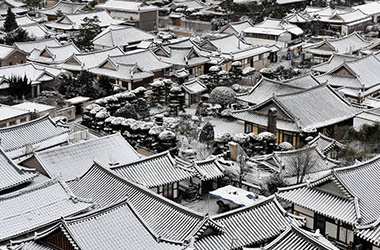


While the rest of the city has been industrialized, Jeonju Hanok Village retains its historical charms and traditions. Join our Korea Jeonju Hanok Village Tour!
Highlights
Minimum travelers: 2 Duration 1 Day
Overview
Jeonju is located about 3 3-hour drive from Seoul. Jeonju has been the birthplace of remarkable Korean artists throughout History. Many traditional arts, crafts, and architectural breakthroughs have been attributed to this city. Visit the Jeonju Hanok Heritage Village, home to 800 traditional Korean hanok houses. You can also taste Jeonju food, such as the renowned Jeonju bibimbap, and try on Hanbok, the traditional Korean clothes.
Description
Driving about 3 hours from Seoul, we arrived in Jeonju city. We will visit the most famous Hanok Village first – Jeonju Hanok Village. There are over 800 Korean traditional Houses located in a district of narrow alleys. While the rest of the city has been industrialized, the Hanok Village retains its historical charms and traditions. It is especially well-known for its beautiful roof curves. As it is the biggest intact Hanok village of the country, you will feel like you have traveled back in time while walking through the complex of alleys. Jeongdong Catholic Church was built in honor of Roman Catholic martyrs of the Joseon Dynasty on the very same spot where the martyrs lost their lives. The land was purchased by French Priest Baudenet in 1891. Priest Poniel was in charge of designing the church, and he was also the one in charge of the famous Myeongdong Cathedral in Seoul. Gyeonggijeon Shrine is a building from 1410 and holds the portrait of King Tae-jo. You can find the King’s and his wife’s mortuary tablets here, at the Jogyeong Shrine. The existing structure was remodeled in 1614. Inside Gyeonggijeon, the portraits of King Tae-Jo and other successive kings such as Sun-jong, Cheol-jong, Yeong-jo, and many others are on display.
The Nambu Traditional Market was opened as a regular public market in 1905. Currently, the market is composed of about 800 stores with 1,200 workers selling vegetables, fruits, food, dried fish, furniture, silk goods, and general goods.
Jeonju is the home of Jeonju-style Bibimbap, whose color and the mixture of ingredients over freshly steamed rice showcase the skill and love the chefs put into their food. Jeonju Bibimbap is famous all over Korea and often considered the “original”. Consequently, the Best Bibimbap Restaurant is located in Jeonju. We can take you there for lunch to discover the art of Bibimbap and enjoy a great and nutritious meal. Jeonju is also famous for its delicious and unique street food! Traditional rice cakes made from fresh strawberries, handmade ice creams, shrimp dumplings, meat and cheese skewers, and even Grapefruit beer, to mention a few. Travelers can try the Hanbok is the Korean traditional dress, as it was worn in former times. The colorful dresses with lively patterns are said to be exceptionally beautiful in Jeonju. Nowadays, Koreans only wear Hanboks on special occasions. During our tour, you can experience what it is like to wear a Hanbok! Choose your favorite Hanbok and walk through the traditional village!
Before going back to Seoul, you can choose to visit one more attraction below:
1) Jeonju Railbike Station was an abandoned train station. Nowadays, it is a popular attraction thanks to the railbike. The course takes approximately 30 minutes; it is 3.4 km and is suitable for all ages.
2) Gongsanseong Fortress [UNESCO World Heritage], which was established during the Baekje Period (234-678). You will be able to see an impressive Korean castle (about 2.5km long) and enjoy the view of the Geumgang River.
3) Suwon Hwaseong Fortress [UNESCO World Heritage] is an impressive structure from the latter part of the Joseon Dynasty (1392-1910), and it is also the official fortress of Suwon city. The fortress was designated as Historical Monument Nº3 in January 1963 and in December 1997.
4) During the Korean War, Gwangmyeong Cave was a place where the coal mining workers were forced to work and were abused. It was abandoned from 1972 to 2011, and it has been transformed into a tourist attraction after being purchased by Gwangmyeong city.


Only logged in customers who have purchased this product may leave a review.
Itinerary
Price
Please contact us
Inclusions
Exclusions
Optional tour:
| Price per person | |
| Jeonju Rail Bike | USD10 |
| Gongsanseong Fortress | USD5 |
| Suwon Hwaseong Fortress | USD5 |
| Gwangmyeong Cave | USD10 |
Important information
Cancellation & Refund Policy
| Cancellation more than 14 days before the tour departure date | Full Refund |
| Cancellation 1-14 days before the tour departure date | No refund for 20% deposit |
| Cancellation 24 hours before the tour departure date or no show | 100% non-refundable |
Tour itinerary & additional charge
| Number of travelers | Price per hour (Cash payment in KRW) |
| 1-7 people | KRW25,000 |
| 8-15 people | KRW40,000 |
| 16 or above | KRW55,000 |
Responsibility




Reviews
There are no reviews yet.