




Visit all the dazzling attractions and must-see landmarks of Seoul, the DMZ, the historic city of Gyeongju, the second-busiest city, Busan, and Jeju Island.
Highlights
Minimum travelers 2 / Duration 10D9N
Overview
10D9N Highlights of Korea group tour. Visit all the highlights and must-see landmarks of Seoul city, DMZ, historic city Gyeongju, the second busiest city Busan, and Jeju Island.
Description
Day 1 Arrival at Incheon airport
Since 2005, Incheon International Airport has been rated the best airport worldwide by Airports Council International every year. After arrival at Incheon airport, you can go to the hotel by public transport (Airport bus or airport railway with the subway)—the hotel is located in the central area of Seoul city. The nearest night market is Myeongdong.
This district is one of the busiest places in Seoul and is among places in Seoul and is among Korea’s premier shopping destinations, as it is a stunning shopping district with many shops selling well-known brand clothes, shoes, accessories, but also cosmetics and K-pop goods.
Day 2: Visit the landmarks of Seoul – Gyeongbokgung Palace & Namsan Tower
Today, our guide will accompany you to the landmarks of Seoul City. Our guide will meet you at the hotel lobby at 09:30 a.m. Visit the must-see place in Seoul – Gyeongbokgung Palace, built in 1395, is also commonly referred to as the Northern Palace because its location is the furthest north when compared to the neighboring palaces of Changdeokgung Palace (Eastern Palace) and Gyeonghuigung (Western Palace). Gyeongbokgung Palace is arguably the most beautiful and remains the largest of all five palaces.
At the top of Namsan Mountain, there is the Palgakjeong Pavilion, which has a fantastic view. At Seoul Tower (479.7m), you can view the whole landscape of Seoul and the West Sea beyond Incheon.

Day 3: Visit the UNESCO World Heritage Suwon Hwaseong Fortress and the Korean Folk Village
At first, we visit the Hwaseong Fortress. It is an impressive structure from the latter part of the Joseon Dynasty (1392-1910), and it is also the official fortress of Suwon city.
The fortress was designated as Historical Monument Number 3 in January 1963, and in December 1997, it was also designated a UNESCO World Cultural Heritage Site.
The next stop is the Korean Folk Village introduces traditional culture from the late Joseon period to both local and international visitors through cultural classes, shaman faith, seasonal customs, and others. Also, the village shows various places with unique features such as a farming village, private house, official districts, Confucian academy, seodang (village school), and a village street in realistic descriptions, as well as a nobleman’s house and traditional workshop.
Day 4 See the demarcation of North Korea and South Korea at the infamous border (DMZ)
Visit the third tunnel discovered in 1978 by South Korean forces. It spans over 1,635m in length, 2m in width and 2m in height and is located 52km from Seoul. It is estimated that approximately 30,000 soldiers could move through the tunnel per hour. The scale is similar to the 2nd tunnel, but it was thought to be more threatening as an invasion tool than the 1st and 2nd tunnels.
Day 5 Explore Gyeongju Historic Area (UNESCO World Cultural Heritage)
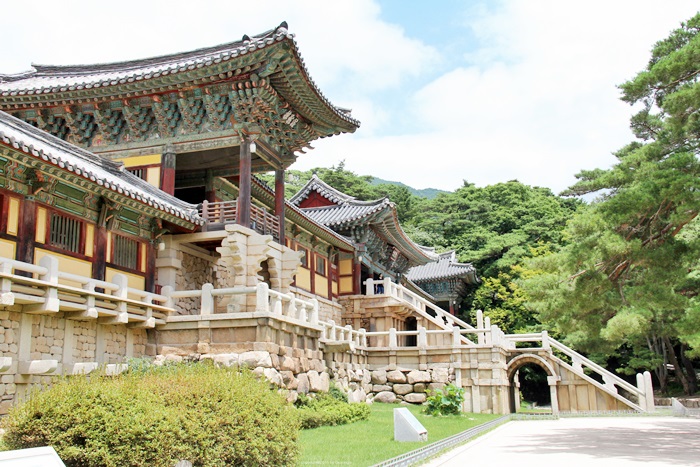
Depart for Gyeongju city from early morning from Seoul. After drive around 4 hours, arrival to Gyeongju city. Gyeongju is known for countless historical sites and relics. Bulguksa Temple is the representative relic of Gyeongju and was designated as a World Cultural Asset by UNESCO in 1995. The beauty of the temple itself and the artistic touch of the stone relics are known throughout the world. Seokguram is the representative stone temple of Korea. The official name of Seokguram, National Treasure Number 24, is Seokguram Seokgul. Designated as a World Cultural Heritage Site by UNESCO in 1995, it is an artificial stone temple made of granite. After the tour, move to Busan for hotel Check-in.

Day 6 Busan. Second most populous city after Seoul
Take a day tour of Busan. Busan is the second-most-populous city after Seoul, with a population of over 3.5 million inhabitants. It is the economic, cultural and educational center of southeastern Korea. The Haedong Yongungsa Temple is situated on the coast of the north-eastern portion of Busan. This superb attraction offers visitors the rare find a temple along the shoreline. Also, we will visit the most popular beach in Haeundae.
Day 7 Jeju Island contains the natural World Heritage site Jeju Volcanic Cone and Lava tubes
Move to the Jeju Island through the domestic airline after the morning tour in Busan. Go ahead visit Camellia Hill and O’sulloc Green Tea Museum. Camellia Hill is and arboretum that spans 172,000 square meters. The arboretum is home to 6,000 camellia trees of 500 different species including species that are known to produce the world’s largest and earliest blossoms. The O’sulloc Tea Museum is a cultural space where the west and east, and modernity and tradition coexist in harmony. The museum has a tea gallery, eco-friendly resting area, and cafe where visitors can enjoy a variety of tasty ta-based desserts.
Day 8 Visit the Cheonjeyeon waterfalls and see the stone pillars piled up along the coast
Cheonjeyeon waterfalls named ”The Pond of God”, consists of 3 sections. Around the falls, a variety of plant life thrives, such as the rare ”solimnan” reeds. To the east, there is a cave where cold water pours from the ceiling to create the first waterfall. The water gathers into a pool and from there, falls two more times, creating the second and third waterfalls, which then flow into the sea.
In Cheonjeyeon Valley, visitors can see Seonimgyo Bridge (arch bridge with 7 nymphs carved on the side) and the octagonal Cheonjeru Pavilion.
Jusangjeolli Cliff was formed when the lava from Hallasan Mountain erupted into the sea of Jungmun. They are rock pillars shaped like cubes or hexagons of various sizes and almost seem as if stonemasons had carved them out. The administration of the district named them ”Jisatgae Rocks” from their old name ”Jisatgae”. The 20m cliff makes it a popular spot for high tide and sea angling. The waves of the high tide crashing into the side of the cliff provide a breathtaking view of the ocean surrounding the pillars.

Day 9 Visit the UNESCO World Natural Heritage, Seongsan Sunrise Peak a Mangjangul Cave
Seongsan Sunrise Peak rose from under the sea in a volcanic eruption over 100,000 years ago. There is a huge crater at the top of Seongsan Ilchulbong Peak. The crater is about 600m in diameter and 90m high.
With the 99 sharp rocks surrounding the crater, it looks like a gigantic crown. While the southeast and north sides are cliffs, the northwest side is a verdant grassy hill that is connected to the Seongsan Village.
Mangangul Cave is one of the finest lava tunnels in the world, and it is a designated natural monument. A lava tunnel is formed when the lava that was deep in the ground spouts from the peak and flows to the surface. After Jeju tour, we move to Seoul from Jeju airport, and then Hotel-check in, stay overnight in Seoul.
Day 10 Hotel-Check out
After breakfast and Hotel Check-out, you can continue your own itinerary or depart from Korea.
Only logged in customers who have purchased this product may leave a review.
Day 1 Arrival in Korea > Seoul
Day 2 Seoul
Day 3 Suwon, Yongin
Day 4 DMZ, Seoul
Day 5 Gyeongju
Day 6 Busan
Day 7 Busan > Jeju Island
Day 8 Jeju Island
Day 9 Jeju Island > Seoul
Day 10 Seoul
Inclusions
Exclusions
Optional fees
Important information
Adjustment Policy
Cancellation and Refund Policy
Responsibility


Reviews
There are no reviews yet.